Probíhá údržba. Přesouváme stránky na nový server. Web je dočasně v režimu jen pro čtení — přihlášení, registrace a komentáře budou možné během několika desítek minut. Děkujeme za pochopení.
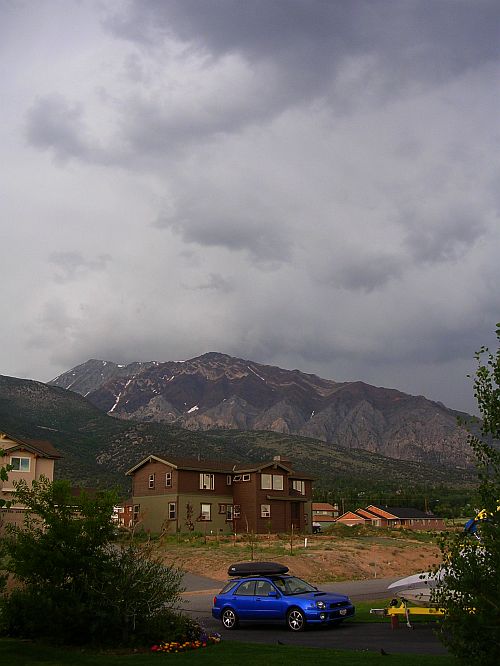
It is now July- a stormy, unsettled month here in the Sierra Eastside. Recently we have been experiencing a heat wave, no doubt caused in large part by the fact that certain European nations won't shut up and do what they are told by the masters of the Northern Hemisphere. I suspect all the hot air coming from European politicians is the source of it all. Billowy, expansive clouds stack on top of each other above the 13,000 ft mountain cr
I admit there was some hesitation on my part when hearing Kačka's idea of our summer break - canyoning with some friends near Lago Di Garda in Italy. Spending one week, near the climbing Mecca Arco and the mountain biking heaven of Lago Di Garda, participating in some strange sport while my climbing shoes and bicycle will stay at home was not too appealing for me.
Film Boulder Fest has gone througt its first happening - festival, where the films about bouldering were shown this weekend in Loučovice (granit bouldering area close to Český Krumlov, South Bohemia, Czech Republic). Except the Czech amateur production there were also films from Poland, France and Italy.
If you are one of the many who are a part of the recent bouldering craze, you have probably seen the video Rampage. If you have, you surely remember the section where Chris Sharma dangles around on stupid steep roofs like a monkey with no technique. In the immortal words of Kip Dynomite, "That's what I'm talking about."
Update + video of woman climbing
Czechs on the first World Cup competition today in lead climbing 2006, Puurs, Belgium: Tomáš Mrázek ended 3rd, Martin Stráník 11th.
1 Flavio Crespi (ITA)
2 David Lama (AUT)
3 Tomas Mrazek (CZE) + video, Tomas in finals + woman finals A. Eiter, S. Levet a Ch. Durif
Last round of the Ice Climbing World Cup took place in Hemsedal, Norway. The finale hosted not only competitors but also organizers of all parts in order to analyze this year World Cup and to establish rules for the future.
It is now July- a stormy, unsettled month here in the Sierra Eastside. Recently we have been experiencing a heat wave, no doubt caused in large part by the fact that certain European nations won't shut up and do what they are told by the masters of the Northern Hemisphere. I suspect all the hot air coming from European politicians is the source of it all. Billowy, expansive clouds stack on top of each other above the 13,000 ft mountain crest which dominates the western view from my desert home. The Sierras are a truly year round climbing destination with more rock than one could climb in a lifetime. In order to fully appreciate what the Eastern Sierra has to offer, you have to be a diverse climber willing to accept and conform to different rock types and levels of protection: from the tightly bolted volcanic sport areas of the Owens River Gorge and Clark Canyon, to the sparse protection of the granite knob climbing in Tuolumne, to the self reliant style needed for backcountry alpine walls. What skills you use is largely dictated by the season and which venues are accesable at that time.
I done told you they was clouds: thanks a lot to ungrateful Europeans.
Rather that blather on and on about the fine attributes of the area, I would like to introduce it through pictures and commentary. Below is just a sampling of some of the areas to climb in the Sierra during the warm months, say from April until October, focusing mostly on areas within an hour’s drive or less from Mammoth Lakes, the major vacation destination in the area.
Clark Canyon
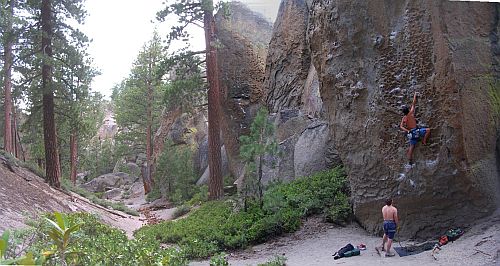
Clark Canyon is located just thirty minutes north of the town of Mammoth Lakes, and hosts the highest concentration of summer sport climbing in the area. The cliffs range from 10 to 30 meters, though most of the climbs are well below 30m. Of about 120 routes total, the vast majority are in the moderate 5.10 range- making Clark a great everyman's area. There are, however, a handful of climbs in the 5.12 range which are beautiful.
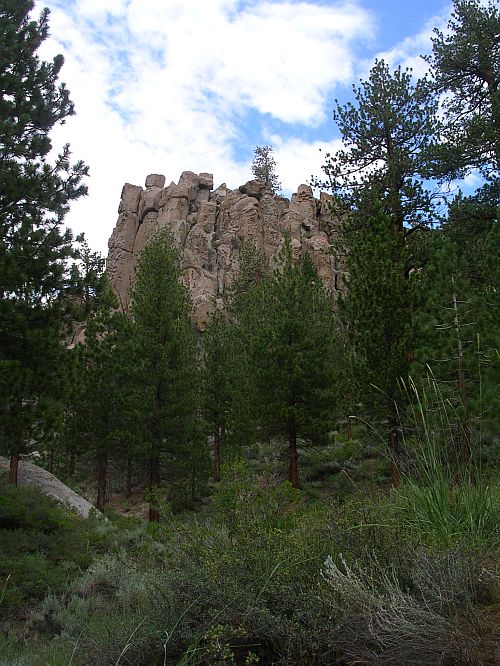
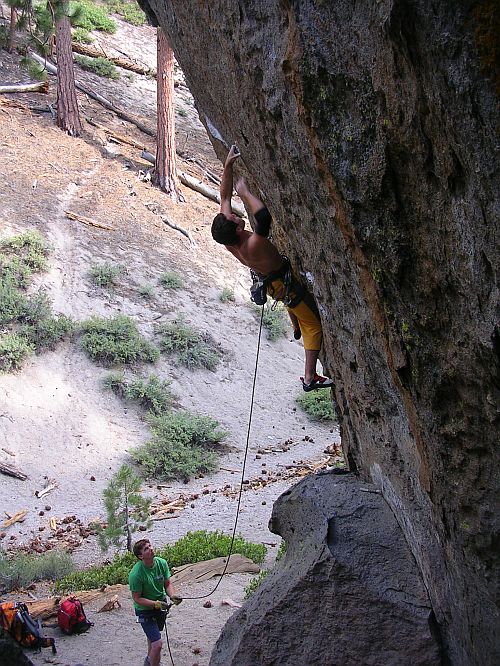
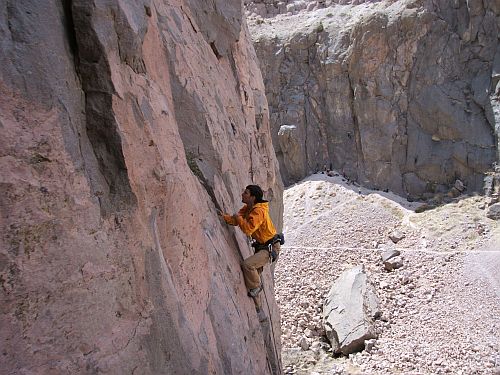
The volcanic plugs of Clark rise above the jeffrey pine forest, where the scent of pine and sage mingle in one's nose.
The Dike Wall is the finest crag located in the Lakes Basin, which is just above the town of Mammoth, opposite the ski area. This fine piece of granite is situated at a higher elevation than most crags in the area, thus its access largely depends on the snowpack. Generally speaking, the east face is usually dry by June, while the north face may take as long as August to melt off. A great training area because of it's proximity to town, the dike wall maxes out in the easy 5.12 range.
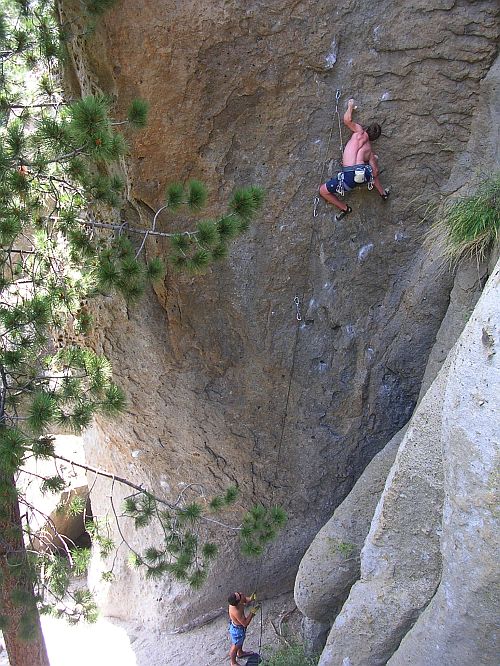
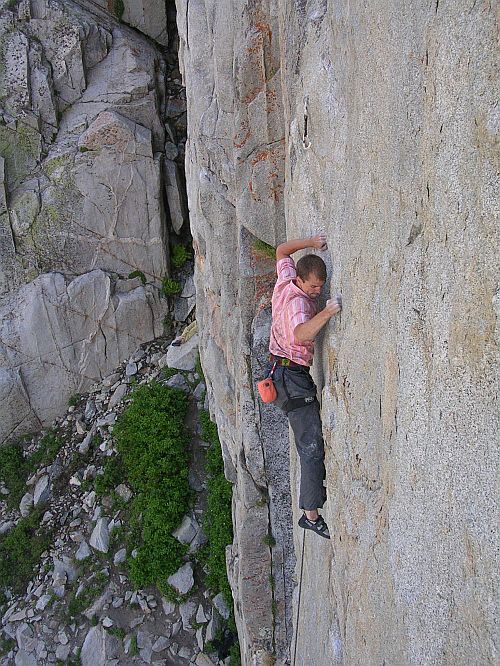
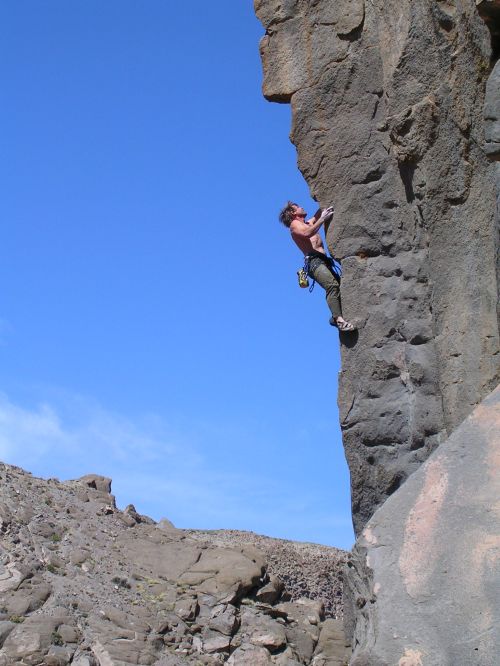
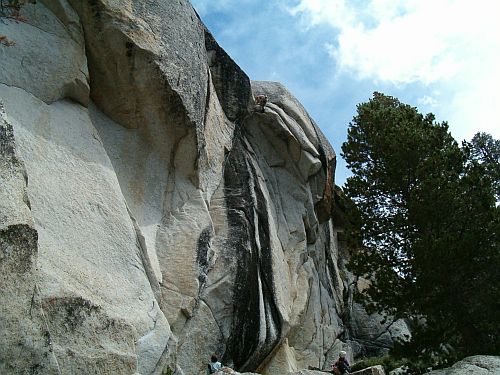
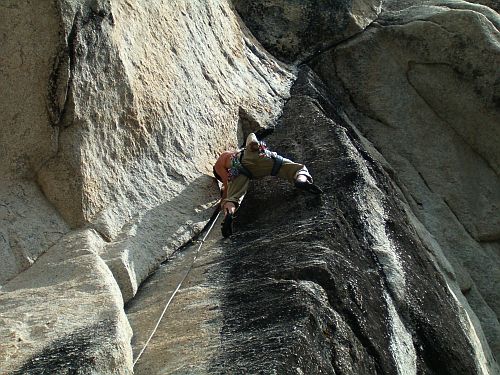
The East face of the Dike Wall sports slightly overhanging, technical granite routes between 25 and 30m in length. Drew Davis, working undercover on Secret Agent Man, 5.12a.
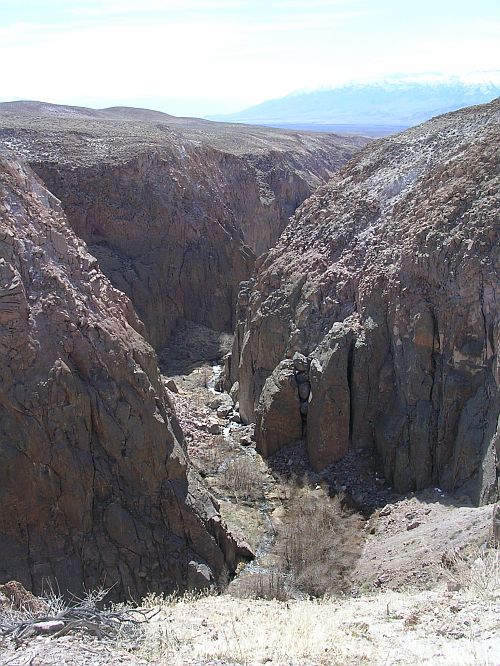
While not really a Summer climbing area, the Gorge is great for the transitional periods where there may still be snow in higher elevations, but the bouldering down in Bishop may be a bit too warm.
This is by far the largest sport venue in the area and, while the Gorge may not be picturesque, it hosts several hundred sport routes- from 5.8 to 5.13. The rock is probably my least favorite in the area, but some people love it. They typical route there sports rather smooth, bland edges up vertical walls, but the routes are very long, and it is great for endurance training.
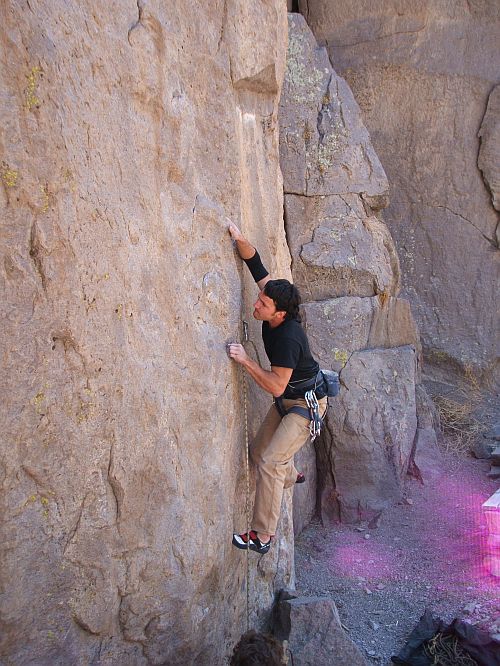
If you run into Peter Croft at the Gorge, he has probably already soloed a major peak in the Sierra that morning and will procede to do laps on your project in the afternoon. Here he is on Wooleybugger, 5.12d.
Ah the High Sierra, the jewel that makes this area shine. Indeed, none of the above mentioned areas would have been discovered had it not been for the draw of the Sierras that has lured climbers for over a century. A list of Sierra climbers is like a list of who's who. What the Sierra offer is some of the best alpine rock in the world, coupled with the best weather of any major range. A climbers paradise.
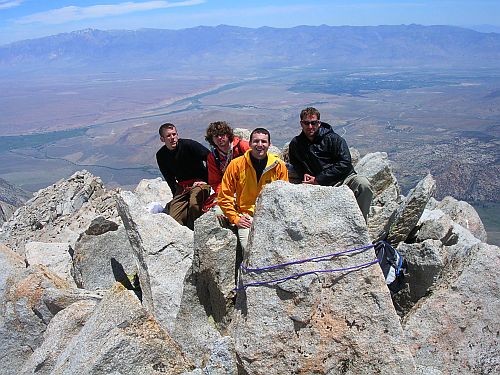
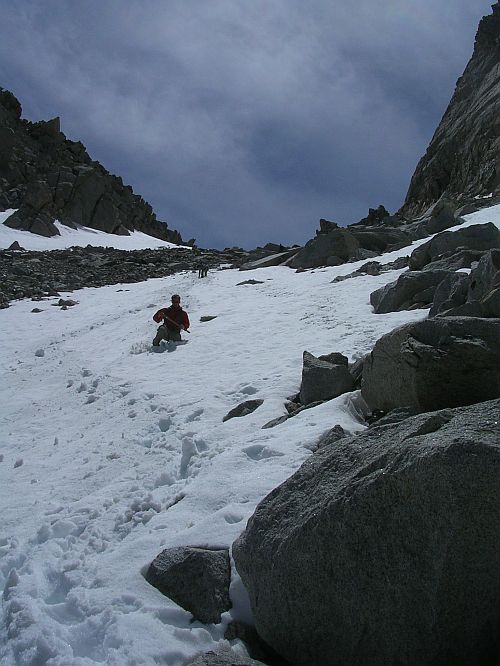
Basin Mountian is by no means the best peak in the range, nor even in the top ten. It does, however, entail 10,000 ft elivation change, mid-angle snow chutes, and 400ft. of low fifth class rock to the summit.
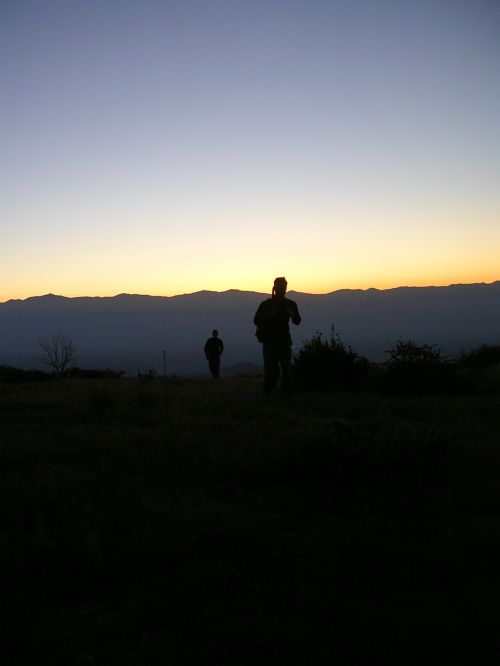
Look for this picture on the cover of your next REI catalog. The sun about to rise over the White Mtns. on the predawn approach to Basin Mtn, 13,200ft.
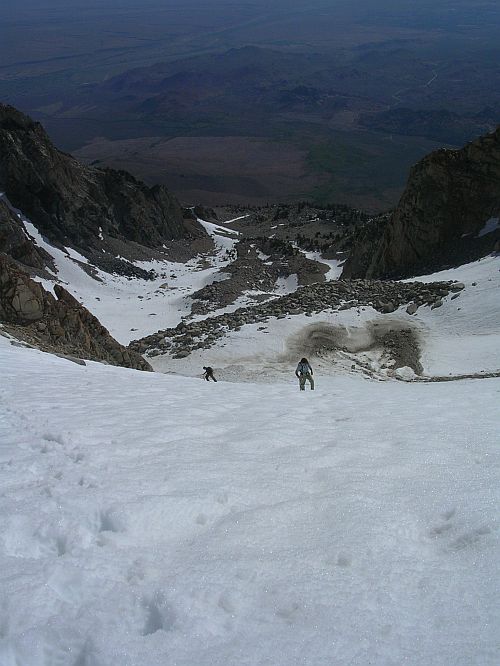
The upper snow gully on Basin lasts forever, at least on the way up. 6,000 ft. bellow you can spot the small outcrops which make up the Buttermilk bouldering area.
The Meadows and Lembert Dome. A fine place to smoke pot, throw a frizbee, kick a stupid little sack of beads around a circle, or generaly do anything but actual rock climbing.
Tuolumne Meadows is where the smarter Yosemite climbers head in the Summer months. While the Valley bakes in 90 degree plus weather, choked by tourist and lame posers in Camp 4, TM is breazy and cool with plenty of breathing space between climbers, tourist, and other climbers. Access to the Meadows from the Eastside is dependent on the opening date of Tioga pass, which varies greatly from year to year.
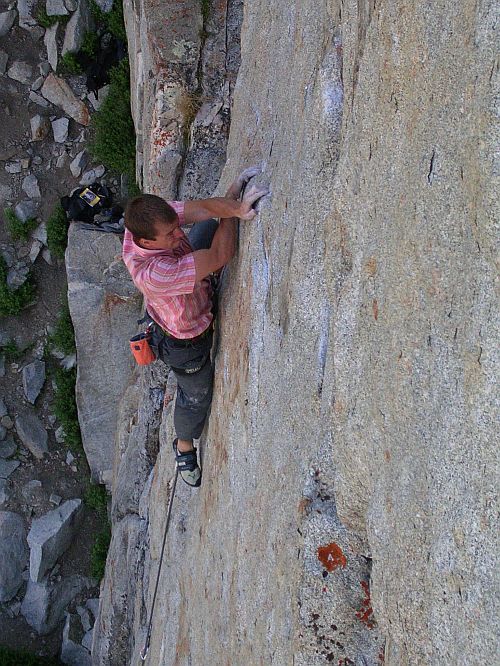
The author topping out on a Tuolumne Classic, Do or Fly, 5.11c.
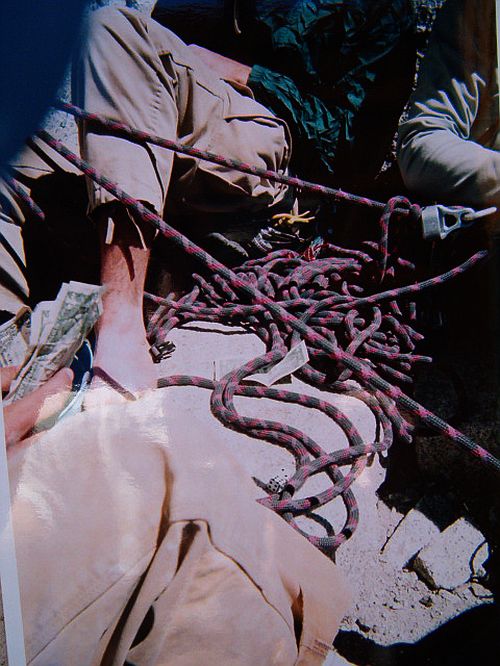
An impromptu game of craps a pitch below the summit of Cathedral Peak, which looms over TM. Come to Tuolumne and I will take all your money. What you know about seven?
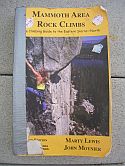
The best decription, indeed the only description, of climbing in the imediate area of Mammoth is that by Marty Lewis and John Moyner. Included are Clark Canyon and the Dike Wall, along with many, many more areas.
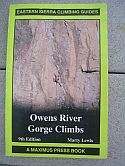
Marty Lewis is also the author of the only guide to the Gorge, which has a new addition out this year. It looks pretty simmilar to this, only it's border is Blue. Also, one can find a quite good topo at Drtopo.com.
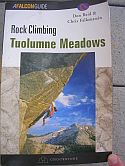
There are several Tuolumne guides out, including a newer version of this one, which is by far the most comprehensive.
Stay tuned for more areas, more pics and more information...


 Registration






 lezec.cz
 It is now July- a stormy, unsettled month here in the Sierra Eastside. Recently we have been experiencing a heat wave, no doubt caused in large part by the fact that certain European nations won't shut up and do what they are told by the masters of the Northern Hemisphere. I suspect all the hot air coming from European politicians is the source of it all. Billowy, expansive clouds stack on top of each other above the 13,000 ft mountain cr
 Results of World Cup in bouldering, Grindelwald, Switzerland 9.-10.6.2006 women: 1. Anna Stohr (AUT), 2. Emilie Abgrall (FRA) , 3. Anja Hodann (SWE), ..., 5. Helena Lipenská (CZE).
 More than 140 competitors arrived this weekend to Petrohrad despite the weather forecast was horrible.
 I admit there was some hesitation on my part when hearing Kačka's idea of our summer break - canyoning with some friends near Lago Di Garda in Italy. Spending one week, near the climbing Mecca Arco and the mountain biking heaven of Lago Di Garda, participating in some strange sport while my climbing shoes and bicycle will stay at home was not too appealing for me.
 Film Boulder Fest has gone througt its first happening - festival, where the films about bouldering were shown this weekend in Loučovice (granit bouldering area close to Český Krumlov, South Bohemia, Czech Republic). Except the Czech amateur production there were also films from Poland, France and Italy.
  If you are one of the many who are a part of the recent bouldering craze, you have probably seen the video Rampage. If you have, you surely remember the section where Chris Sharma dangles around on stupid steep roofs like a monkey with no technique. In the immortal words of Kip Dynomite, "That's what I'm talking about."
  Update + video of woman climbing
 Last round of the Ice Climbing World Cup took place in Hemsedal, Norway. The finale hosted not only competitors but also organizers of all parts in order to analyze this year World Cup and to establish rules for the future.
 Again all lovers of bouldering and scrambling on boulder blocks can take part in the unique competition.